Reported from a stone fabrication workshop in Brazil

How a Brazilian Stone Shop Owner Built an AI Product with ChatGPT and Codex

Fernanda Marco spent a decade cutting, measuring and quoting granite and marble by hand. In about two weeks, she used ChatGPT and Codex to turn that experience into two working products — tested by the professionals who actually do this work.

Built through hands-on experimentation, testing and iteration with ChatGPT, Codex and the OpenAI API.

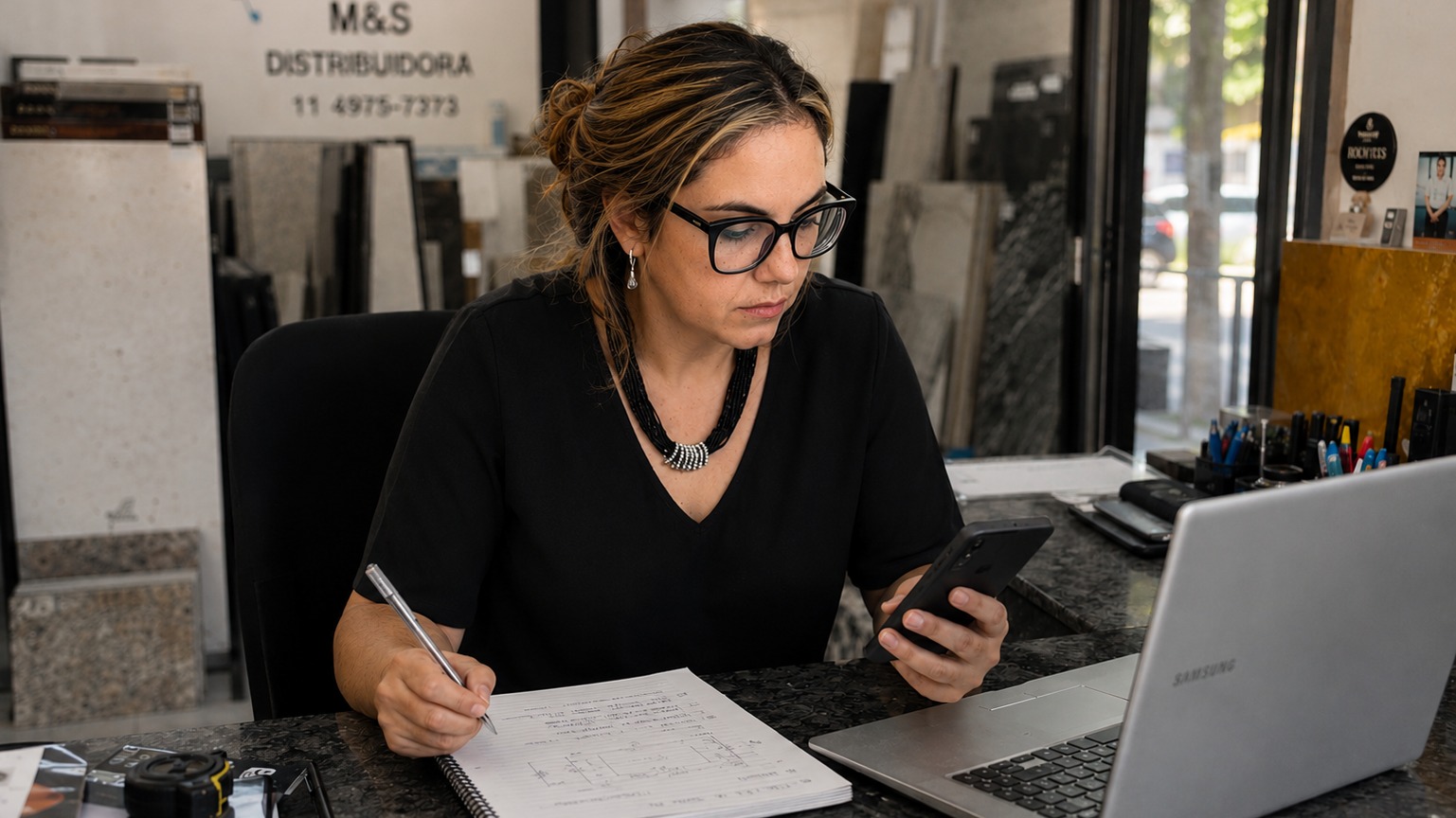
Fernanda Marco at her stone fabrication business, next to a delivery truck loaded with granite and marble slabs
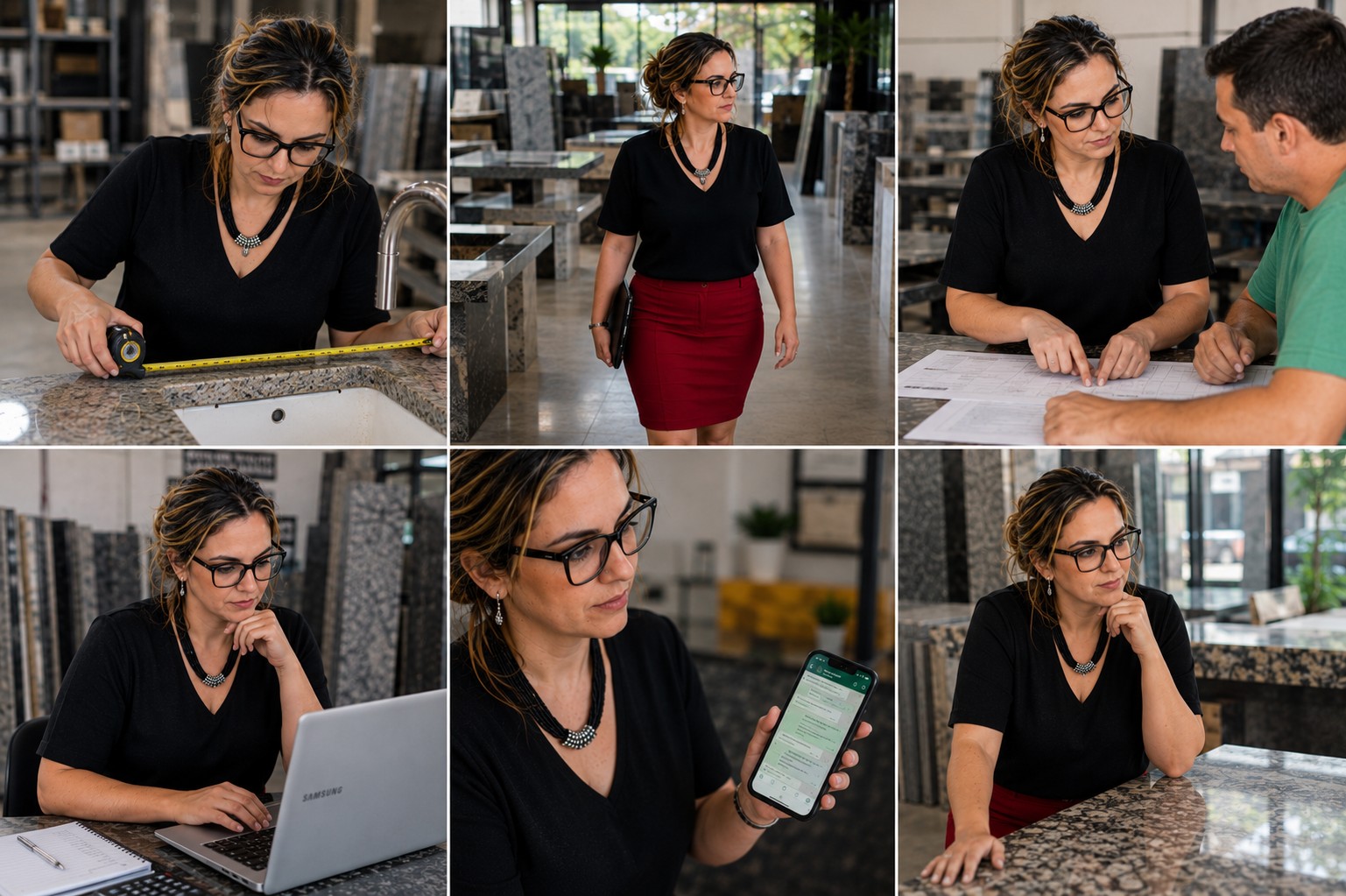
Fernanda Marco, stone fabrication business owner — Brazil
Ten years in stone, marble and granite

≈ Two weeks

From the first Codex session to working prototypes.

Real users

Tested by working professionals from the stone industry, not a focus group.

Industry expertise

Years of practical, hands-on knowledge — turned into working software.

01 — Who

I knew the industry. I didn't know how to build software.

My name is Fernanda Marco. I own a stone fabrication business in Brazil — the kind of workshop that turns raw blocks of granite, marble and quartz into kitchen counters, sinks and bathroom slabs for other people's homes.

For nearly a decade, my daily work has been measurements, quotations, technical drawings, production lists and customer conversations. I understood those problems deeply. What I did not have was any background in software engineering or artificial intelligence.
Interior of a stone fabrication workshop with granite and marble slabs stacked and stored
Inside the workshop — where the actual problems live

02 — What problem existed

The problem was already part of my daily work.

WhatsApp

Customer requests arriving through WhatsApp, at all hours, in every format.

Input

Measurements sent as text, photos, audio messages or hand-drawn sketches.

Math

Manual calculations for countertops, cut lists and areas — repeated all day.

Docs

Technical documents and production lists assembled by hand, one job at a time.

Speed

Delayed responses while a quote or drawing waited its turn.

Chaos

Information scattered across conversations, notebooks and spreadsheets.

"I was not looking for an abstract AI experiment. I wanted to solve problems I faced inside my own business."

03 — How it happened

Then I started building with ChatGPT and Codex.

I described the real rules of my industry — how a countertop is measured, how a quote is priced, what a customer means by "L-shaped" — and tested what came back. ChatGPT helped organize product decisions and user flows; Codex turned those decisions into working code.

Nothing about it was automatic. The first versions made mistakes: calculations that needed correcting, drawings that had to be revised, customer requests that revealed rules I hadn't thought to specify. The value wasn't a perfect result on the first try — it was being able to test, find a problem and fix it at a speed that had never been available to me before.

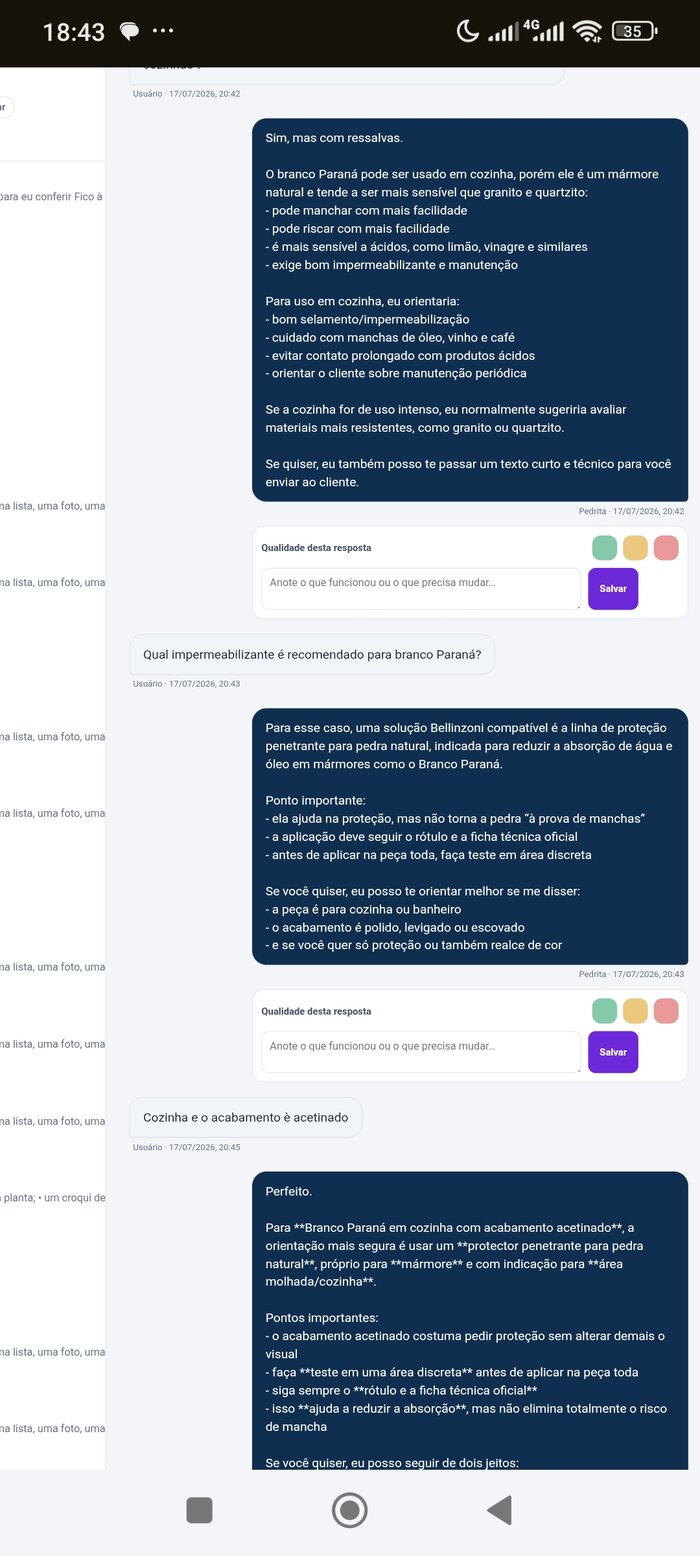
Internal testing view of a Pedrita AI conversation, with a response-quality rating panel used to review and correct answers
Reviewing and correcting a real response during testing

04 — How fast

About two weeks, start to first real user.

Six phases, compressed into roughly two weeks of intensive work. Each one ended with something a real stone fabricator could actually touch and react to — and each reaction shaped the next phase.

  1. Beginning

    Identified the first workflow and began translating stone fabrication rules into product requirements.

  2. First prototype

    Built the initial calculation and visualization features.

  3. First working application

    Created the first usable version of Marmorista PRO.

  4. WhatsApp integration

    Connected Pedrita to WhatsApp through the OpenAI API.

  5. Real users

    Stone fabrication professionals started testing calculations, drawings and documents.

  6. Continuous improvement

    Real conversations revealed errors, edge cases and new opportunities for improvement.

05 — The products

What was built

A practical application for stone fabricators.

  • Countertop calculations
  • Measurements and area calculations
  • Simple technical drawings
  • Piece lists
  • Production information
  • PDF generation
  • WhatsApp sharing
WhatsApp conversation with Pedrita generating an L-shaped countertop technical drawing from customer measurements
Drawing request → technical output, inside WhatsApp
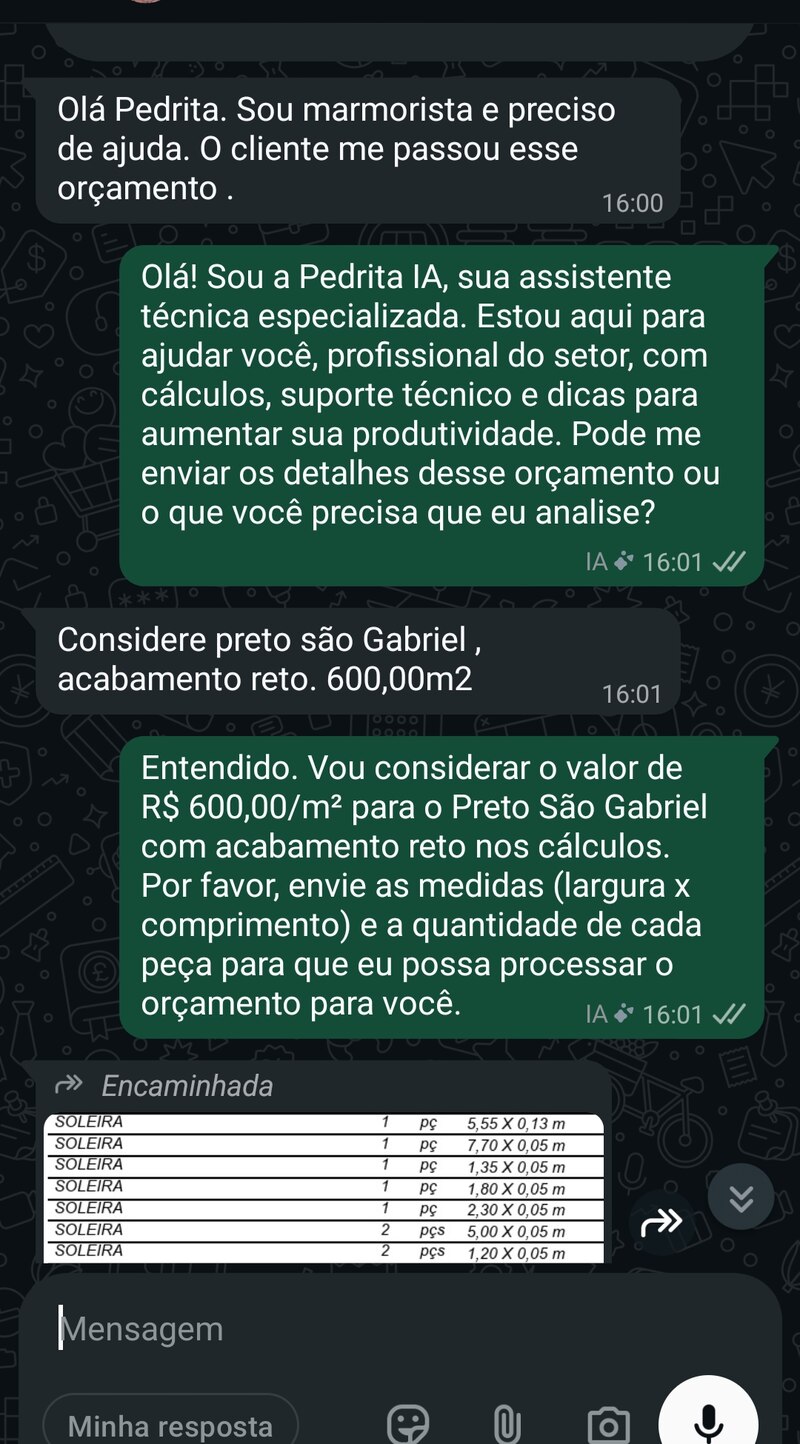
WhatsApp conversation showing a cut list of stone pieces with dimensions, used to calculate area and pricing
A real cut list, ready for area and price calculation
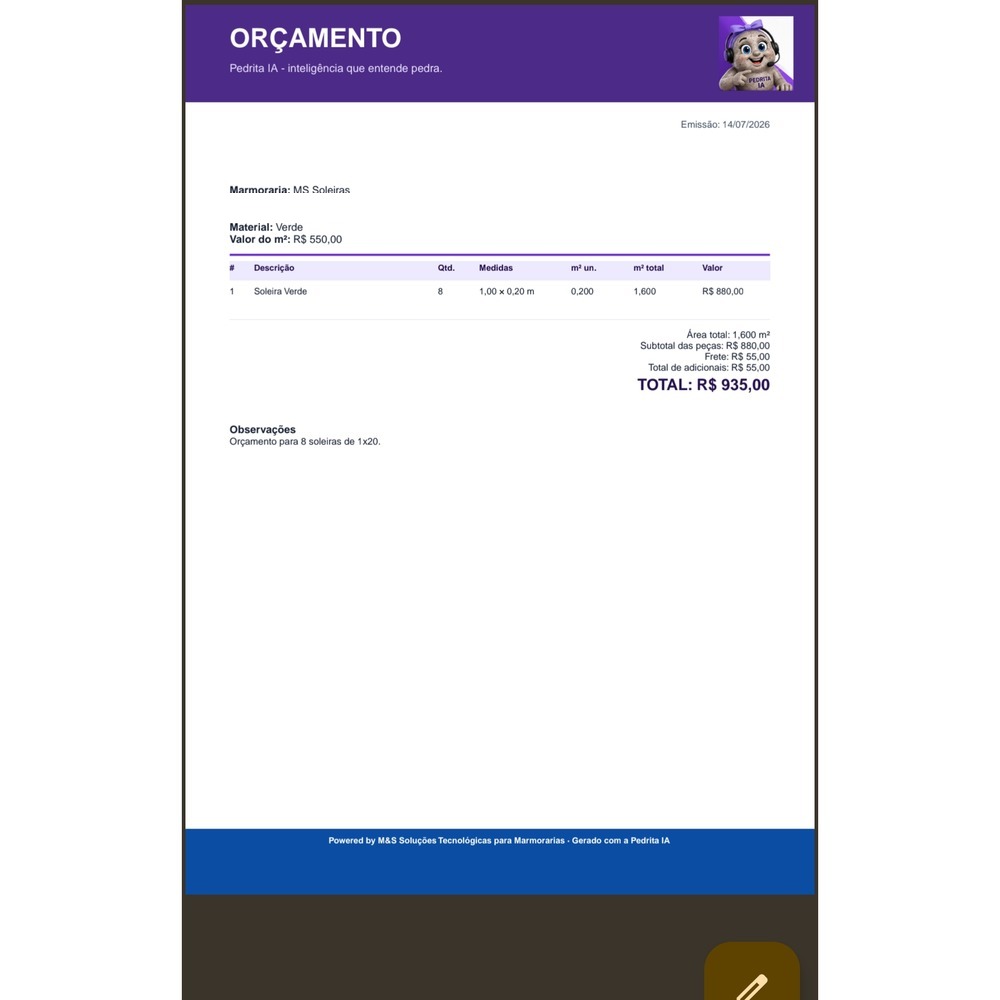
A real quotation PDF, generated automatically with client, material and pricing details, ready to send through WhatsApp
A quotation PDF, generated and shared directly in WhatsApp

An AI assistant designed for a traditional industry.

Pedrita is a specialized AI assistant connected to WhatsApp through the OpenAI API. She was designed to understand the language, calculations and practical questions of stone fabrication businesses — quotation help, technical guidance, drawing generation, document generation, and a direct connection to Marmorista PRO.

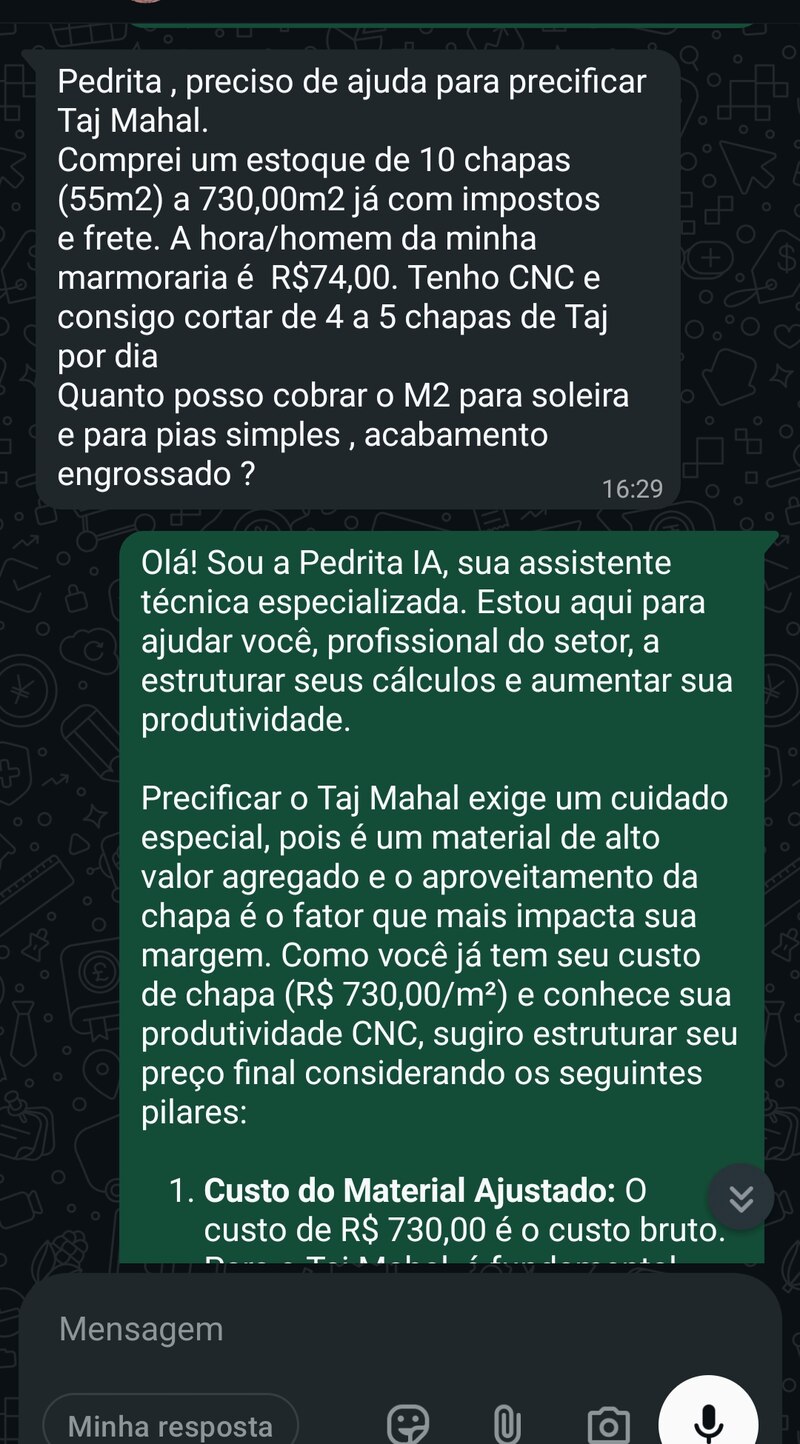
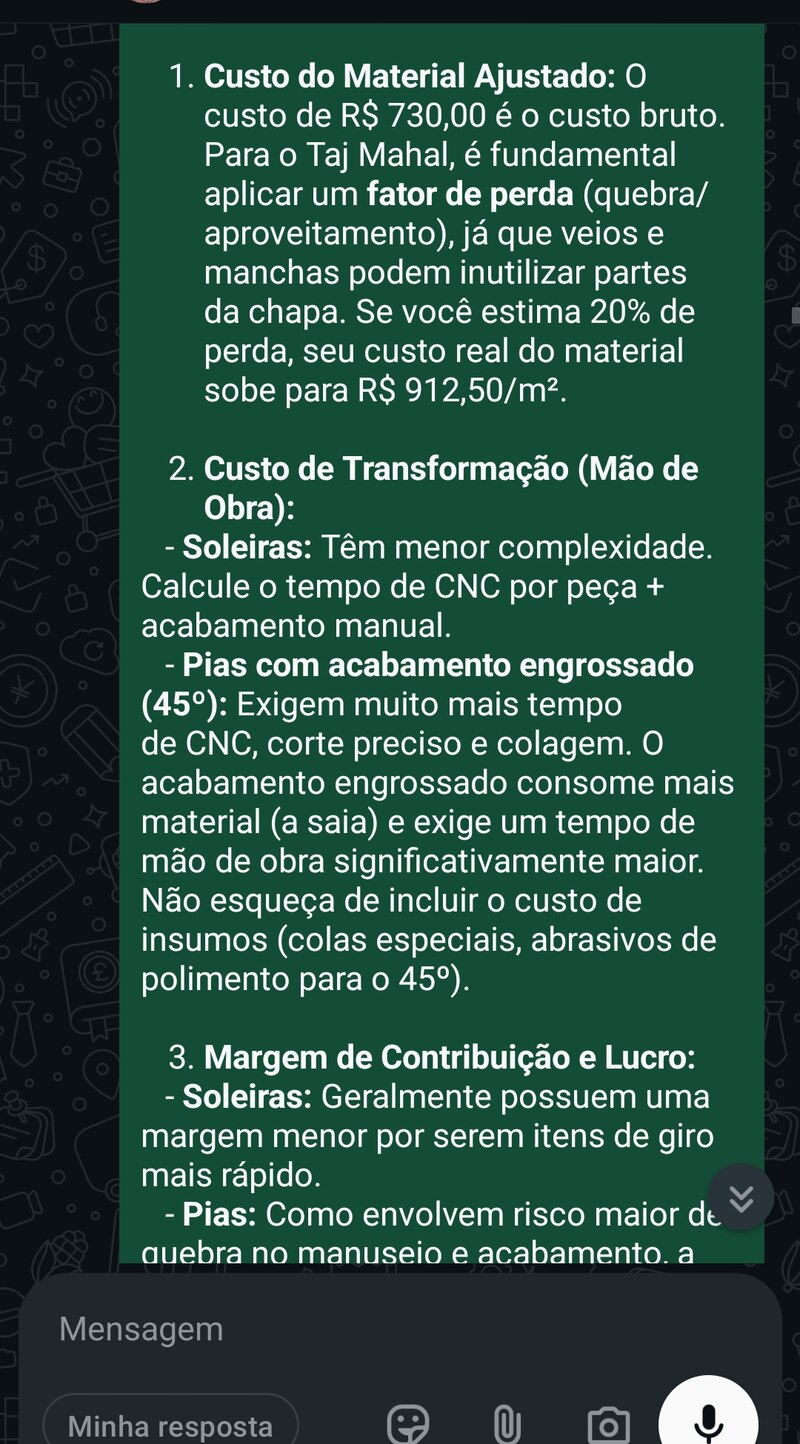
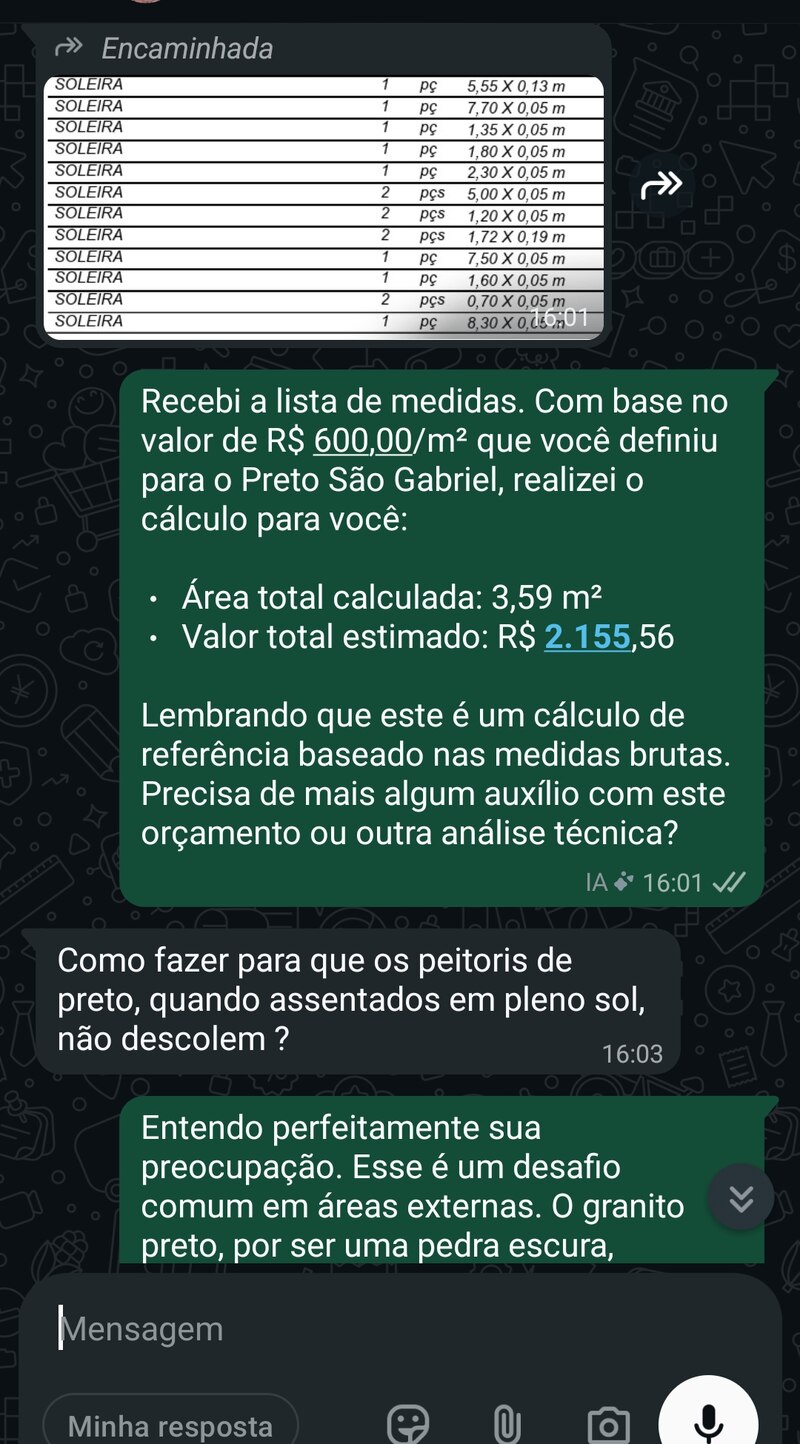
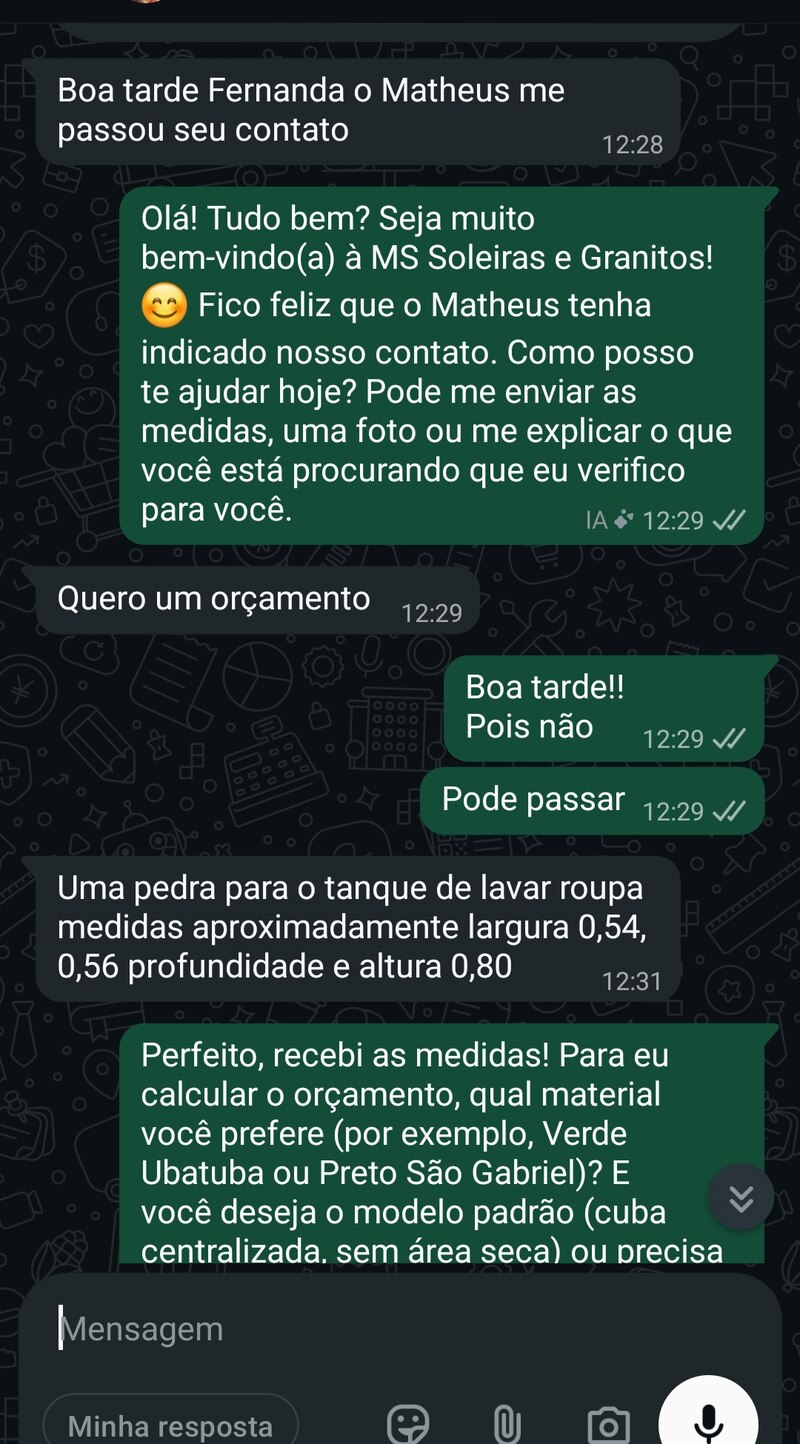
Four real WhatsApp conversations between customers and Pedrita AI, covering material recommendations, finish comparisons and scheduling
Four real conversations — material advice, comparisons, and scheduling

06 — In practice

From a WhatsApp message to a finished document

Every screenshot in this story is a frame from the same underlying flow. A short screen-recording will replace this placeholder once one is edited together.

  1. WhatsApp
  2. Pedrita
  3. Technical drawing
  4. PDF
  5. Marmorista PRO

Demo video coming soon

07 — What changed

Built with real users, not only demonstrations.

The project reached working stone fabrication professionals early, not after months of internal polishing. Their questions exposed calculation errors, incomplete workflows and situations a generic demo would never surface — and each one made the product better.

It isn't finished. The goal is something useful, transparent, and steadily more reliable.

Dozens of professionals reached
Real WhatsApp conversations
Repeated product testing
Continuous corrections
Early partnership interest

08 — Why it matters

AI did not replace my expertise. It made it buildable.

I did not stop being a stone fabrication business owner and become a software engineer. What changed was my ability to turn industry knowledge I already had into something other people could use.

Small business owners in traditional trades usually know exactly what's wrong with the tools available to them — they just depend entirely on software companies to build the alternative. That dependency is what's shifting.

What I brought

  • Industry experience and business context
  • The technical rules of stone fabrication
  • Customer behavior and real requests
  • Every product decision
  • Testing, correction and practical judgment

What the AI tools enabled

  • Organizing requirements into a product
  • Explaining unfamiliar technical concepts
  • Generating and reviewing code
  • Accelerating prototypes
  • Shortening the distance between idea and implementation

"The next generation of industry software may also be built by the people who work inside those industries."

09 — Since then

A prototype became a real business opportunity.

What began as a solution for my own business started attracting attention from other professionals and companies in the sector — the moment it became clear the problem was bigger than my own stone shop.

  • Professionals began testing the product, and some came back to use it again
  • Companies in the industry expressed partnership or sponsorship interest
  • The project opened possibilities for events, integrations and commercial use
  • The product keeps evolving

11 — In short

From industry knowledge to working software

Pedrita and Marmorista PRO are still evolving. But they already represent something I wouldn't have thought possible a short time ago: a business owner from a traditional industry, participating directly in building the specialized software that industry needed.

Built in Brazil. Created from a real business problem. Improved through real use.

Tools that helped make this possible

This project was developed with the assistance of ChatGPT, Codex and the OpenAI API.

OpenAI, ChatGPT and Codex are trademarks of their respective owner. This is an independent project and is not officially endorsed by OpenAI.

12 — About Fernanda

About Fernanda

Fernanda Marco is a Brazilian entrepreneur and owner of a stone fabrication business. She created Pedrita AI and Marmorista PRO by combining years of practical industry experience with AI-assisted software development.

Contact Fernanda

Or send a message directly